Rough Play
Cat Play & Behavior
Rough Play · 6 min read
Am I Teaching My Cat That Arms Are Toys?
If you've ever pulled your hand back mid-play and thought "I'm making this worse" — you were right. Just not about the play. About what you were wearing.

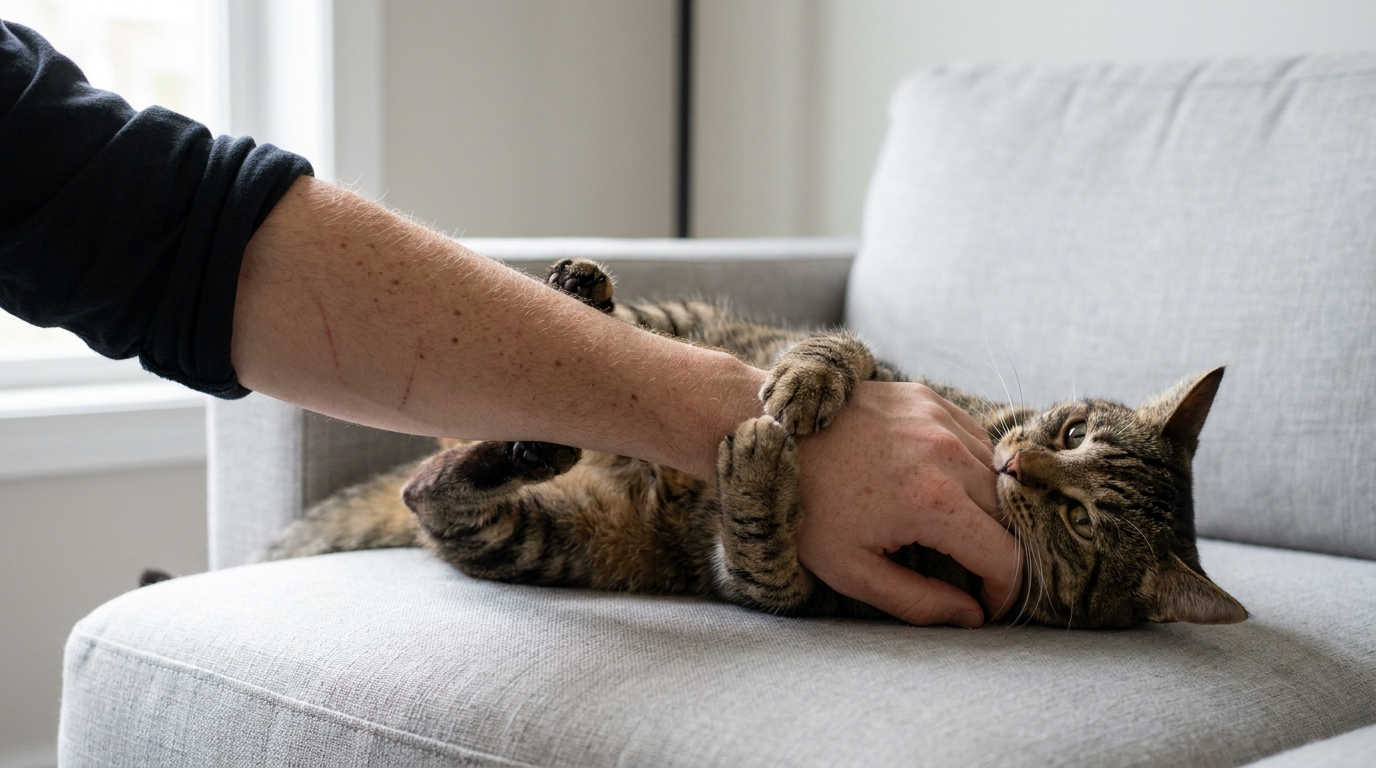
Every cat owner with a wrestler hits the same wall. Your cat doesn't want the feather wand. Your cat wants to grapple. And the only grapple-shaped object in the house is you.
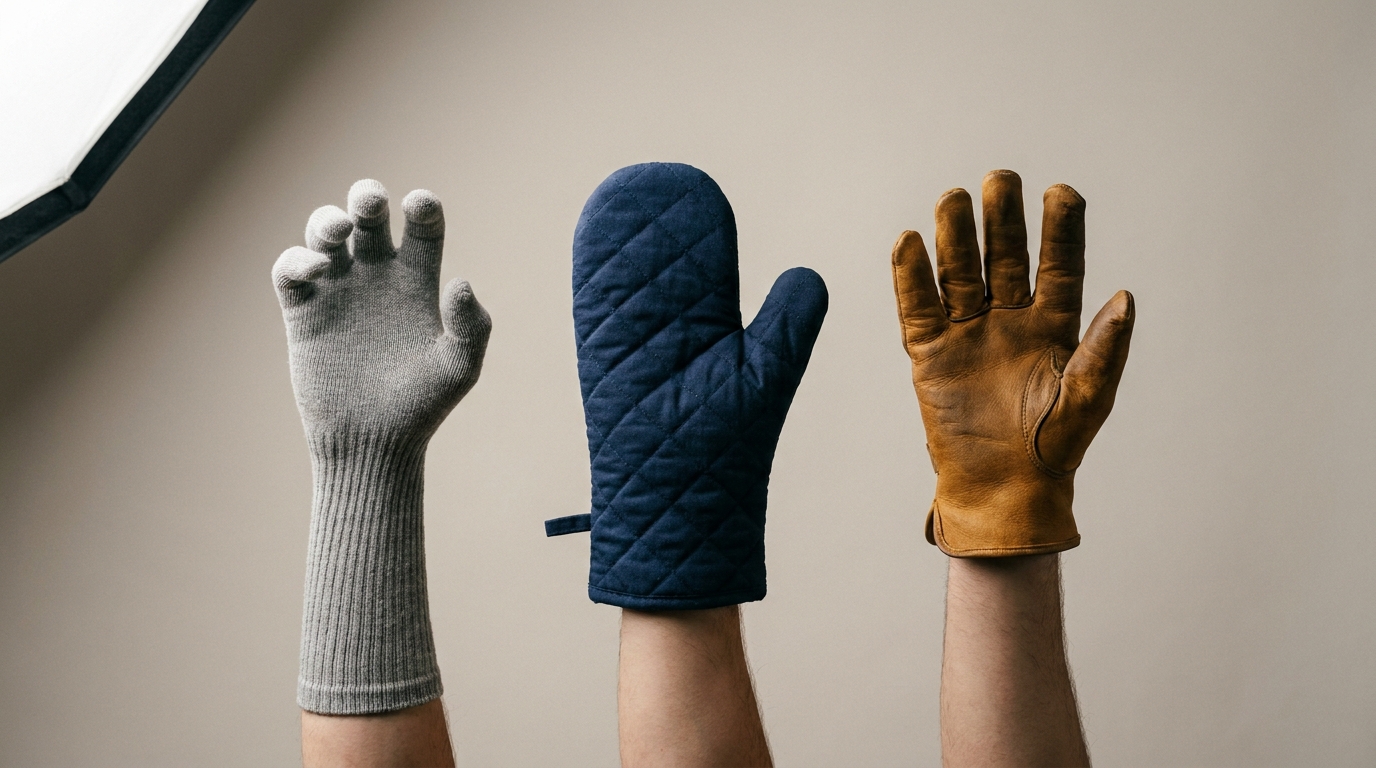
So you improvise. A long sock. An oven mitt. That one hoodie you've written off. And somewhere in the middle of it, the guilt arrives: am I training my cat to attack human hands?
Here's the uncomfortable answer. Yes — and almost every fix people try makes it worse. Not because rough play is wrong. Because of what you keep putting on your hand.
You're not the only one
First, the part nobody says out loud
Scroll any cat thread and the same confessions repeat, almost word for word.
"My arms look like shredded beef. I've stopped rolling my sleeves up at work."
Single-cat household · 1.2k likes
"I've been raw dogging it for six years. Every hoodie I own has thread pulls."
Owner of one very spicy kitty
"Murder mittens engaged the second I sit down. He's not mad. He just wants to fight."
Void owner · 840 likes
"Got a second cat to solve this. They hate each other. Now I have two problems."
Reluctant two-cat household
Owner comments collected from public cat communities and Catsumo's own inbox. Lightly edited for length.
The mechanism of the problem
Your cat isn't a chaser. Your cat is a wrestler.
Cats don't all play the same way, and this is the split that decides everything.
Chase-motivated cats want distance prey. Feather wands, laser dots, crinkle balls. They sprint, they pounce, they're satisfied.
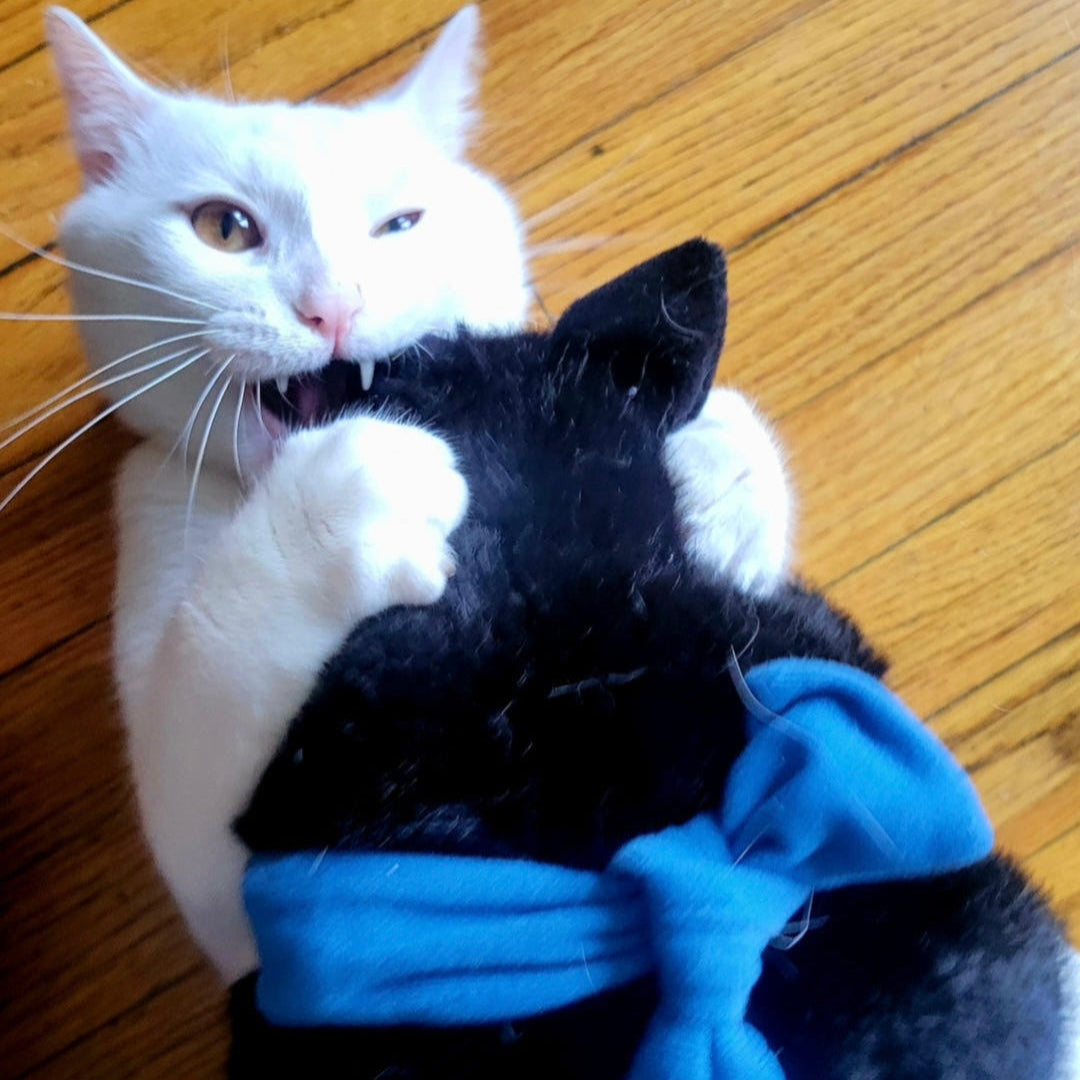
Wrestle-motivated cats want contact prey. They want something to seize with both front paws, bite, and rabbit-kick with the back legs until it stops moving. A wand toy doesn't scratch that itch — it's the wrong category of play, not the wrong toy.
And here's the part that matters: you can't switch a wrestler into a chaser. That drive doesn't disappear when it's ignored. It gets redirected — to your ankles at 6am, to the backs of your calves on the stairs, to your forearm the moment you sit down.
Which means the standard advice — "stop the rough play, walk away, only use wand toys" — is asking you to suppress a drive that will simply resurface somewhere less convenient. You don't need less wrestling. You need a legal opponent.
The part everyone gets backwards
The Glove Paradox
Cats don't learn "biting is allowed." Cats learn what shape is prey. Every protective layer people reach for has the same fatal flaw — it's still shaped exactly like a hand.
This is why the guilt is justified but misdirected. Play didn't create the problem. Camouflage did. A sock removes your pain response while keeping the exact silhouette your cat is learning to hunt — so you play longer, harder, and with far better technique than you would bare-handed. You are running an excellent training program. On the wrong target.
Flip the shape and the same lesson runs in reverse: the hunt has a dedicated object, and skin isn't it.
Everything owners try first
Why each workaround fails
| What you tried | Why it fails |
|---|---|
| Bare hands | Works for the cat. Costs you skin, and every session reinforces hand-as-prey. |
| Long sock | Still hand-shaped. Zero puncture protection. Best-case: teaches the wrong target faster. |
| Oven mitt | Protects the palm, leaves the forearm exposed — that's where bunny kicks land. Still a hand silhouette. |
| Leather work gloves | Most hand-like of all. Bulky, no articulation, cat learns gloved hands are fair game — then tests ungloved ones. |
| Thick hoodie | Buys you 20 seconds. Claws snag the weave and the sleeve joins the graveyard. |
| Kicker / catnip toy | No movement, no resistance, no opponent. A wrestler loses interest in about 40 seconds. |
| Wand toy | Wrong play category entirely. Solves chasing, not grappling. |
| A second cat | A 15-year, four-figure-a-year commitment to fix a 15-minute-a-day problem — and it's a coin flip whether they even get along. |
| A purpose-built opponent | Different shape, real articulation, and armour where the damage actually happens. |
What actually solves it
Three things have to be true at once
This is the whole reason a sock fails and a purpose-built puppet doesn't. Miss any one of these three and you're back to teaching your cat that arms are toys.
It must not look like a hand
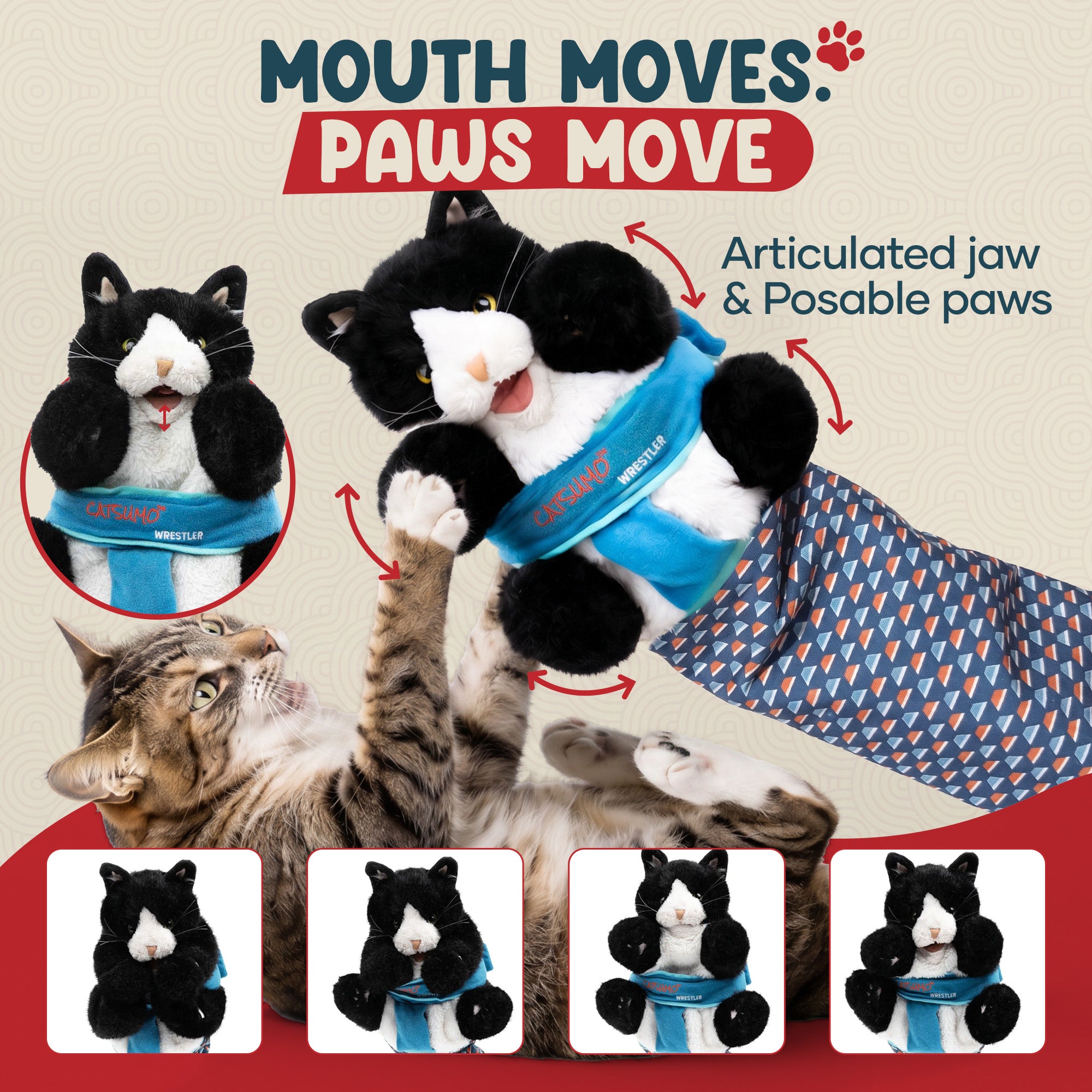
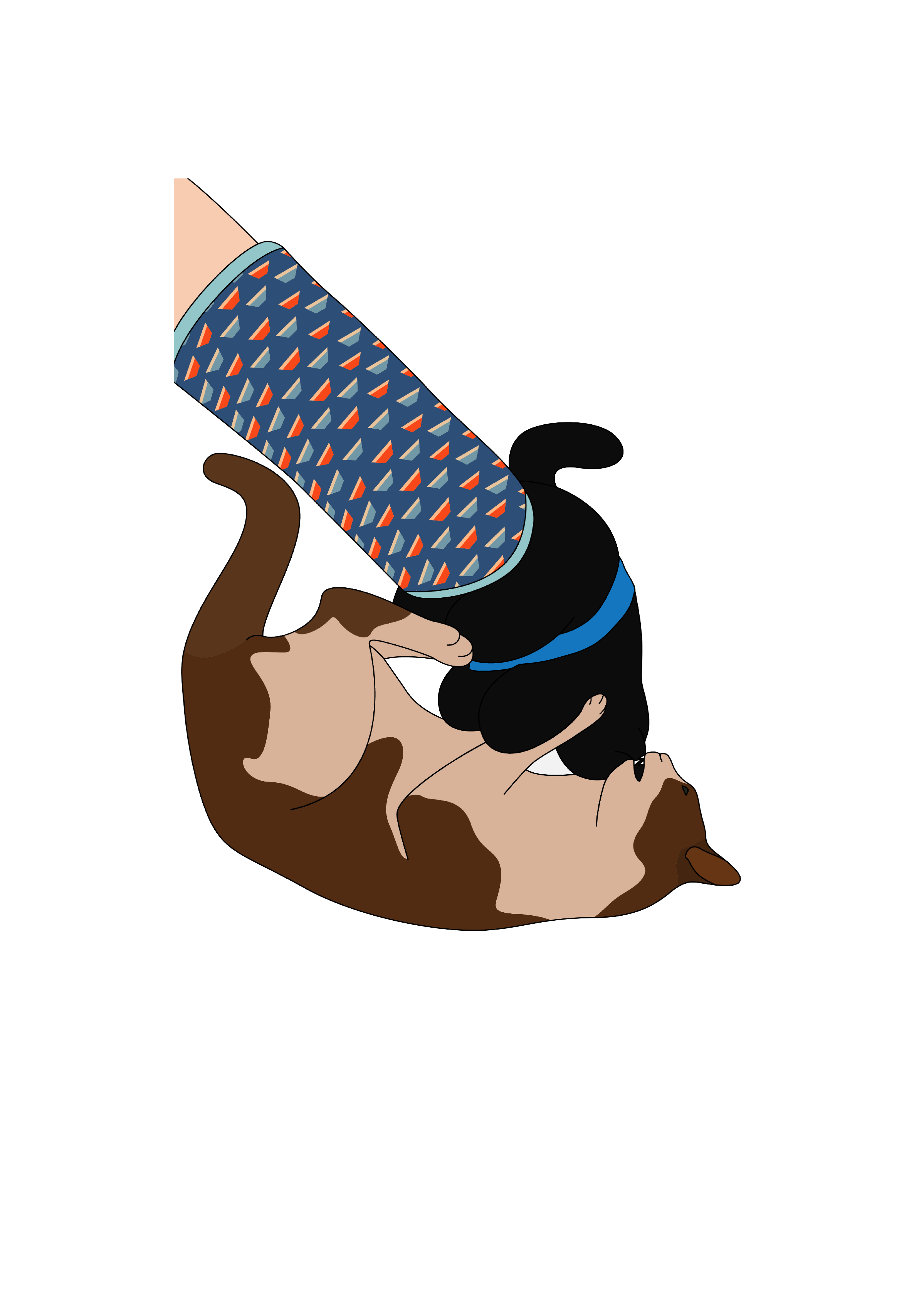
A distinct animal with its own face, whiskers, ears and crinkle sound. Your cat gets a specific opponent to fixate on — not a version of you.
Solves: the aggression fearIt must fight back
An articulated jaw and posable paws, so you can actually grapple, pin and retreat. Resistance is what holds a wrestler's attention past the first minute.
Solves: "my cat ignores toys"It must protect the forearm, not just the hand
Padding inside the head plus a long sleeve up the arm. Bunny kicks land six to ten inches past your wrist — which is exactly where every other solution stops.
Solves: the actual injuries
The original wearable cat wrestling puppet · Free shipping
Does it hold up in real homes
What changes in the first week
The pattern owners report is consistent enough to plan your evening around: ten hard minutes of wrestling, then a cat that sleeps for hours. Not a calmer cat by temperament — a satisfied one. The 6am ankle ambushes are usually the first thing to disappear.

"He goes absolutely feral on it and has not touched my hands since. Wish I'd stopped using socks years ago."
Verified review
"My arms have healed. That's the whole review."
Verified review
The three real hesitations
Straight answers
01"My cat knows my hand is inside it."
Cats aren't fooled — they're focused. They don't need to believe it's a real animal, any more than a dog believes a tug rope is prey. What matters is that the target is visually and texturally distinct, and that it only appears during play. Put it away afterwards and it stays a specific object with a specific context. Bare hands stop being on the menu because something better is.
02"Won't rough play make my cat more aggressive?"
This is the fear worth taking seriously, and the evidence points the other way. Play aggression in cats is usually a symptom of unspent drive, not overspent drive. Owners who give a wrestler a dedicated opponent report fewer ambushes, not more. What genuinely does create hand-aggression is repeatedly offering hand-shaped targets — which is precisely what the sock-and-oven-mitt era was doing.
03"It's a lot for a plush toy."
Fair. Judge it against what it replaces: a bin of ignored toys, a hoodie drawer with thread pulls in every sleeve, and the version of you that flinches when the cat walks over. It's a one-time purchase with an articulated jaw, padded interior and a full-length sleeve — closer to protective equipment than to a plushie. Owners who wanted "just a sock" almost always tried a sock first.
465 reviews · Free shipping · The original, not a marketplace copy
Before you buy anything
Is your cat actually a wrestler?
This only works on contact-play cats. If your cat is a pure chaser, save your money and buy a better wand. Tick what's true:
Where this leaves you
You don't have to choose between a frustrated cat and a shredded arm
- Your cat's grabbing and biting is normal wrestling drive, not a behaviour problem.
- Suppressing it redirects it — usually to your ankles at 6am.
- Socks, mitts and gloves keep the hand silhouette, so they teach the exact lesson you fear.
- A visually distinct, articulated opponent with a full-length sleeve teaches the opposite.
Ten minutes a day. Nothing on the menu but the puppet.
Free shipping · 465 reviews · Accept no imitations
Is your cat a wrestler?
See The Catsumo Wrestler