

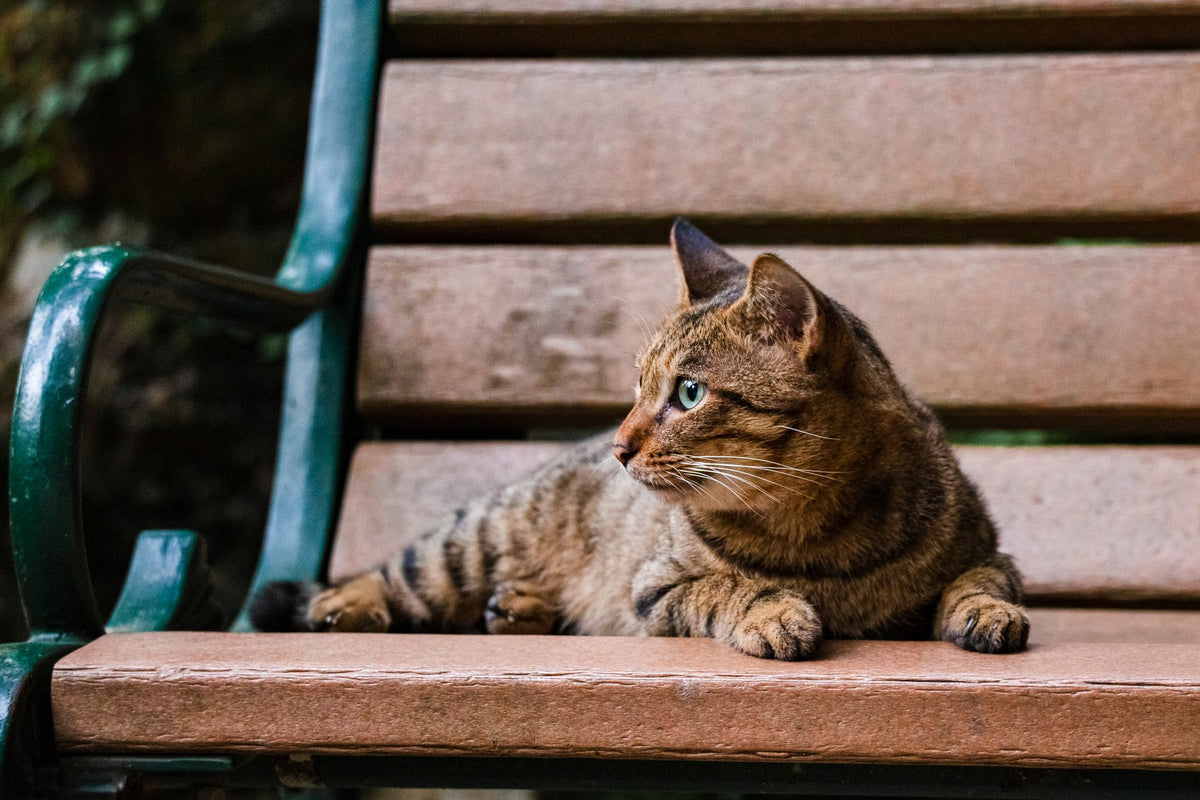
If your cat walks past you, ignores your voice, or vanishes when you call, it's rarely about you. Most "ignoring" comes down to a cat's sensory wiring, its single-track hunting focus, routine and scent cues, and subtle affection signals people simply miss. Cats do form real attachments to their people; you may just be misreading how they show it.
On this page
Do cats actually bond with people?
For a long time, "cats are just independent" was treated as the whole explanation — as if cats simply don't form attachments the way dogs or people do. Behavior research says otherwise.
In a 2019 study published in Current Biology, researchers Kristyn Vitale, Alexandra Behnke, and Monique Udell ran both kittens and adult cats through a modified version of the "secure base test," a method originally used to study attachment in human infants and dogs. The result: the majority of cats in the study showed a secure attachment style toward their human caregiver — seeking them out for comfort and reassurance in a new environment, then confidently going back to exploring once that comfort was available. The proportion of securely attached cats was broadly similar to what's been found in human children and dogs.
That doesn't mean every cat expresses attachment the same way, or as visibly as a dog bounding to the door. It means the bond is usually real — it's the signals that differ, and where "ignoring" tends to sneak in.
6 real reasons your cat seems to "ignore" you
None of these mean your cat doesn't care. They're mostly wiring, habit, and trust — not indifference.
1. Cats run on routine and scent, not on-demand obedience
Cats are highly tuned to predictable patterns and familiar scent cues in their environment. A cat that doesn't come running the instant you call may simply not have learned that your voice reliably predicts something worth interrupting a nap for — yet. Dogs are bred over thousands of years to prioritize human cues; cats' social structure evolved more loosely around resources and safety than around responding to a human's voice on command.
2. Hunting instinct is a single-focus system
When a cat is watching a bird outside, stalking a toy, or fixated on a sound in the wall, they are running the same neural "hunt mode" their wild ancestors used to survive. That mode is narrow and single-tracked by design — it has to be, to actually catch anything. A cat mid-stalk isn't snubbing you; their attention is, quite literally, elsewhere on purpose.
3. Trust is still being built (especially with a newer or shy cat)
Cats that were adopted more recently, had a rough start, or are naturally more cautious often need consistent, low-pressure exposure to a person before they'll seek that person out voluntarily. Approaching, calling, or reaching for a cautious cat too often can slow this down rather than speed it up — trust tends to build faster when the cat is the one choosing to close the distance.
4. Overstimulation from too much handling
Some cats have a lower threshold for petting or handling than owners expect, and will walk away or seem to "tune out" once they've had enough — not because they don't like you, but because they're managing sensory input. Reading a cat's body language (tail flicking, ears rotating, skin twitching) before that threshold is hit tends to keep interactions positive instead of prompting a retreat.
5. They're waiting for a different "language"
A lot of human affection — direct eye contact, leaning in, picking a cat up, baby talk — reads as mildly confrontational or overwhelming in cat body language. Cats often respond far better to being let approach on their own terms, or to interactive play, than to being greeted the way a person might greet another person.
6. You might be missing the affection that's already happening
This is the biggest one. Cats show affection in quieter, more specific ways than dogs typically do, and it's easy to miss the signals entirely if you're only looking for the obvious ones. That's worth its own section.
Affection you might be missing
Before assuming a cat is distant, it's worth checking for these four signals — all of which are well-documented feline friendliness cues, not just cute internet lore.

Four subtle signs your cat actually likes you
- The slow blink. A cat that holds your gaze and slowly closes and reopens its eyes is doing the feline equivalent of a smile. It's a voluntary, relaxed gesture — cats don't offer it to things they feel threatened by.
- The cheek rub (bunting). Rubbing their face or body against your hand, leg, or ankle deposits scent from glands on the cheeks and marks you as part of their trusted, familiar territory.
- The tail-up greeting. A tail held straight up, sometimes with a gentle curl at the tip, is a classic friendly, confident greeting posture between cats and toward trusted people.
- Following you room to room. A cat that keeps relocating to whatever room you're in — without necessarily asking for anything — is choosing proximity for its own sake. That's attachment, quietly expressed.
If your cat does even one or two of these regularly, the relationship is in better shape than "ignoring" makes it feel.
Why play is the fastest bonding shortcut
If subtle affection signals are the evidence of a bond, consistent interactive play is how you build more of it, faster. Play taps directly into a cat's hunting instinct in a structured, positive way, and repeated, predictable play sessions are one of the most reliable tools for building trust with an independent or cautious cat.
The keyword is consistent. A single wild play session doesn't move the needle much. A short, predictable session most days — same rough time, same "opponent," same general spot — gives a cat something to actually anticipate you for, instead of tolerate.
This is where CATSUMO's whole design philosophy comes in: instead of using bare hands (which can accidentally teach a cat that hands are toys — not great for either of you), you become a consistent, physical part of the game.

CATSUMO Wrestler
A wearable "opponent" that lets your cat wrestle, pounce, and bunny-kick a real target — you — instead of your actual hands and ankles. See the Wrestler →

CATSUMO Dohyo Wrestling Mat
A defined 27" ring turns "sometimes we play" into a recognizable daily ritual your cat learns to expect. See the Dohyo Mat →
Neither product is a guaranteed fix for a distant cat — no toy is. They're tools that make the one thing behavior research consistently points to (predictable, positive play) easier to actually stick to.
The 5-minute daily bonding ritual
You don't need a long session — you need a repeatable one. Here's a simple version to try for two weeks before judging results.

A 5-minute ritual, most days, beats an occasional marathon session
- Same time, same signal (30 seconds). Pick a rough time your cat is naturally alert — often early evening. Use a consistent cue, like putting on the Wrestler or unrolling the Dohyo Mat, so your cat learns to recognize "it's starting."
- Let them clock the target (30–60 seconds). Give your cat a moment to notice and fixate before diving in — a slow wiggle of the glove or a wand toy works well here.
- Play in short, real bursts (2–3 minutes). Let them pounce, wrestle, and bunny-kick a real "opponent" instead of your bare hand. Match their energy; back off if they seem overstimulated rather than pushing through it.
- Let them "win" and wind down (1 minute). End on a successful pounce or catch, not mid-chase. A clean ending helps a cat associate the whole ritual with satisfaction, not frustration.
- Offer a quiet moment after. Many cats will settle nearby, groom, or nap close to you right after a good session — a good sign the ritual is landing.
Keeping fresh catnip on hand can help re-spark interest between sessions if a favorite toy starts getting ignored — worth noting that not every cat responds strongly to catnip, so treat it as a bonus, not a requirement. The CATSUMO Catnip Refill Pack is a simple way to keep a toy's pocket fresh without buying a new toy.
FAQ: cats, attention, and bonding
Why does my cat ignore me when I call them?
Usually because your voice hasn't been strongly linked to something worth acting on yet, or your cat is mid-focus on something else, like a sound, scent, or hunting target. It's rarely a deliberate snub.
Does my cat still love me if they seem distant?
Most likely, yes. Research on cat-human attachment has found that a majority of cats show a secure attachment style toward their caregiver, even when their day-to-day behavior looks independent or aloof.
Why does my cat only come to me sometimes?
Cats tend to respond to specific, predictable cues (a sound, a routine, a smell) more than to being called in general. Inconsistent "coming when called" often reflects an inconsistent cue or reward, not inconsistent affection.
Is it normal for cats to ignore their owners?
Yes — occasional or situational "ignoring" is normal cat behavior tied to independence, focus, and sensory processing. It becomes worth a closer look only if it's paired with sudden appetite, litter box, or activity changes, which are better questions for your veterinarian than a behavior article.
Why does my cat ignore me but go to other people?
This is often about routine and predictability rather than preference. A visitor who sits still, doesn't stare or reach, and lets the cat approach can accidentally look "safer" in the moment than a familiar person who's used to initiating contact.
Do cats actually form real attachments to their owners?
Yes. A 2019 study in Current Biology found that most cats tested displayed a secure attachment style toward their human caregiver, similar in proportion to what's been documented in dogs and human children.
What's the fastest way to bond with an independent cat?
Consistent, predictable interactive play. Short daily sessions that a cat can anticipate tend to build trust faster than trying to force affection through petting or handling alone.
Sources
- Vitale, K.R., Behnke, A.C., & Udell, M.A.R. (2019). Attachment bonds between domestic cats and humans. Current Biology, 29(18), R864–R865.
- International Cat Care — Playing with your cat
- International Cat Care — The social structure of cat life
- International Cat Care — Understanding the hunting behaviour of cats
- ASPCA — Common Cat Behavior Issues
This article is for general educational purposes and is not a substitute for individualized veterinary or behavioral advice. If a change in attention-seeking or social behavior is sudden or paired with other new symptoms, talk to your veterinarian.


Leave a comment
This site is protected by hCaptcha and the hCaptcha Privacy Policy and Terms of Service apply.