

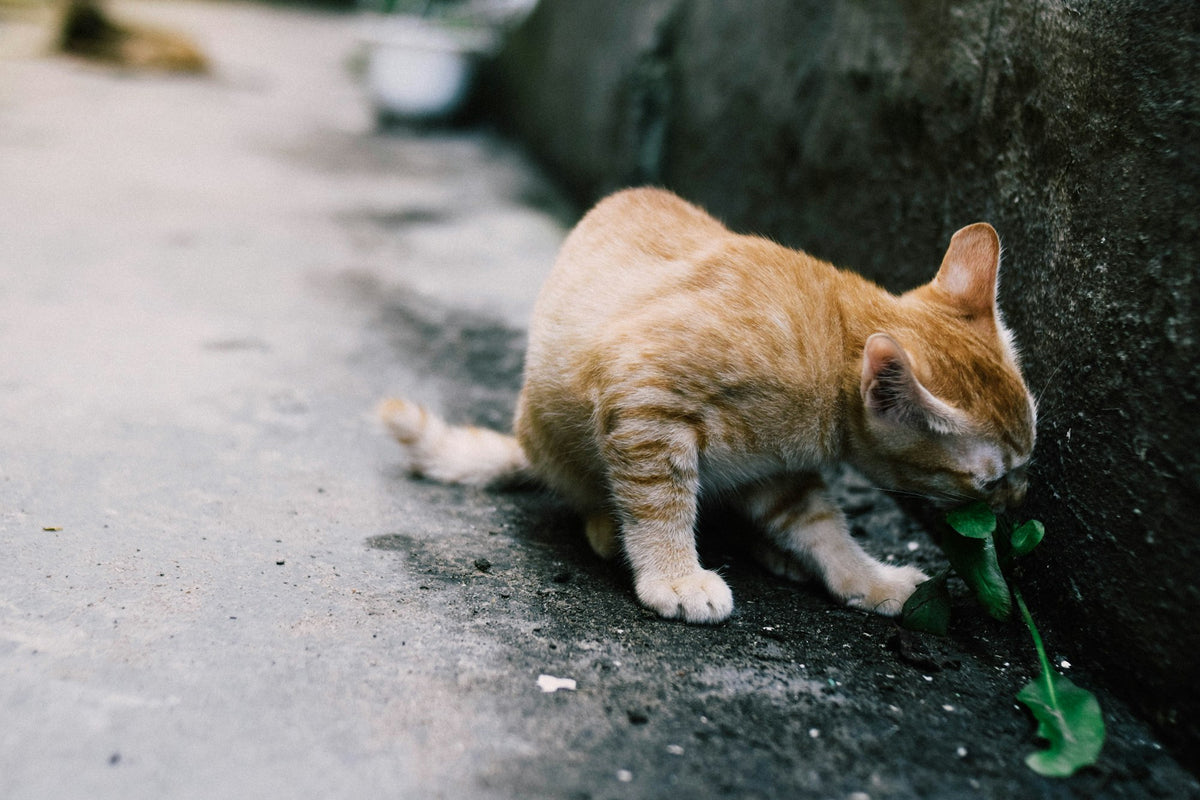
If your cat sniffed a catnip toy, gave it one unimpressed look, and walked away, nothing is wrong with your cat — or your catnip. Roughly a third of cats simply don't carry the inherited trait that makes catnip "work," and kittens under about six months rarely react at all. The fix isn't a stronger catnip. It's a different scent-instinct trigger entirely: silvervine.
On this page
- What's actually happening when catnip "works"
- Why some cats don't react to catnip at all
- Enter silvervine: the backup instinct trigger
- Catnip vs. silvervine at a glance
- How to introduce a new scent toy safely
- Turning a scent reaction into real play
- FAQ: catnip, silvervine, and non-responders
- Sources
What's Actually Happening When Catnip "Works"
Catnip (Nepeta cataria) is a member of the mint family, and its signature effect comes from a single compound called nepetalactone, stored in tiny bulbs on the plant's leaves, stems, and seed pods. When those bulbs rupture — from a paw bat, a chew, or just brushing against the toy — nepetalactone molecules drift into the air and into your cat's nose.
From there, the compound binds to receptors in the nasal passage that signal the olfactory bulb, the smell-processing center of a cat's brain. That signal fans out to the amygdala (which drives emotional/behavioral response) and the hypothalamus, which appears to interpret nepetalactone as something close to a feline sex pheromone. That's why the reaction — rolling, cheek-rubbing, vocalizing, frisking around — looks a lot like courtship behavior, in cats of either sex.
A typical "high" runs about 5–15 minutes before fading, and most cats need roughly 30 minutes to two hours before they're sensitive to catnip again. It's non-toxic and non-addictive, and cats can't overdose on it, though eating large amounts can occasionally cause an upset stomach (PetMD).
Why Some Cats Don't React to Catnip at All
If your cat's reaction was "sniff, blink, walk away," that's not a defective toy or a "weird" cat — it's one of two very common, very normal explanations.
1. It's genetic, not a character flaw
Catnip sensitivity is an inherited trait, and a meaningful share of the cat population simply doesn't carry it. Estimates vary by study — PetMD puts responders around 60%, while cats.com cites a range of 67–80% — but every credible source agrees the same basic fact: somewhere between a fifth and a third of adult cats show little to no reaction, no matter how fresh or potent the catnip is. Research summarized on Wikipedia's catnip entry points to a polygenic (multi-gene) basis for the response, with estimated heritability between 0.51 and 0.89 — meaning it behaves like a stacked genetic trait rather than a single on/off switch, but it's still something a cat is essentially born with or without.
In other words: if your cat doesn't respond, you didn't do anything wrong, and neither did the catnip. It's a coin-flip your cat's genes already made before you brought the toy home.
2. Kittens need time
Age is the other big variable. Most kittens don't show any catnip response until they're roughly 6 months to 1 year old — many sources tie the onset to sexual maturity, around 6–8 months (PetMD, cats.com). A four-month-old kitten sniffing a catnip toy with zero visible reaction isn't a preview of a catnip-immune adult cat — it may just be too early to tell. Catnip itself is safe for kittens to be around; they simply may not have the wiring turned on yet.

A shrug isn't a broken toy — for about a third of cats, it's just genetics
Enter Silvervine: The Backup Instinct Trigger
If catnip is a dud in your house, the next move isn't a bigger dose — it's a different plant entirely: silvervine (Actinidia polygama), sometimes called matatabi. Silvervine is native to the mountain regions of China, Japan, and Russia, and it's actually a relative of kiwifruit, not mint. It's been used to enrich cats' lives for well over a century — Harvard researchers first imported it for study back in 1906 — and today it's one of the most reliable "second chance" scent triggers for cats that shrug off catnip (PetMD).
Silvervine's chemistry is more complex than catnip's. Its main active compound, nepetalactol, is chemically related to catnip's nepetalactone but appears to activate a cat's brain reward and pleasure pathways even more broadly. Silvervine also contains additional compounds — including actinidine and dihydroactinidiolide — that catnip doesn't have, which is likely why so many catnip non-responders still react to it (PetMD, cats.com).
The numbers back this up. In a peer-reviewed comparison published in BMC Veterinary Research, researchers tested a group of 100 cats against silvervine, catnip, valerian root, and Tatarian honeysuckle. Roughly 68% of cats responded to catnip, while almost 80% responded to silvervine — and about 75% of the cats who showed no reaction to catnip did react to silvervine (Bol et al., 2017, BMC Veterinary Research). That's the actual science behind "try silvervine if catnip doesn't work" — it isn't a marketing line, it's a documented pattern.
A cat's reaction to silvervine — rolling, drooling a little, sedation followed by bursts of playfulness — is sometimes nicknamed the "matatabi dance," and it can last a bit longer than a catnip high, up to about 30 minutes. The same PetMD and cats.com sources note two groups that may not react much either way: kittens younger than roughly 8 months, and pregnant cats.

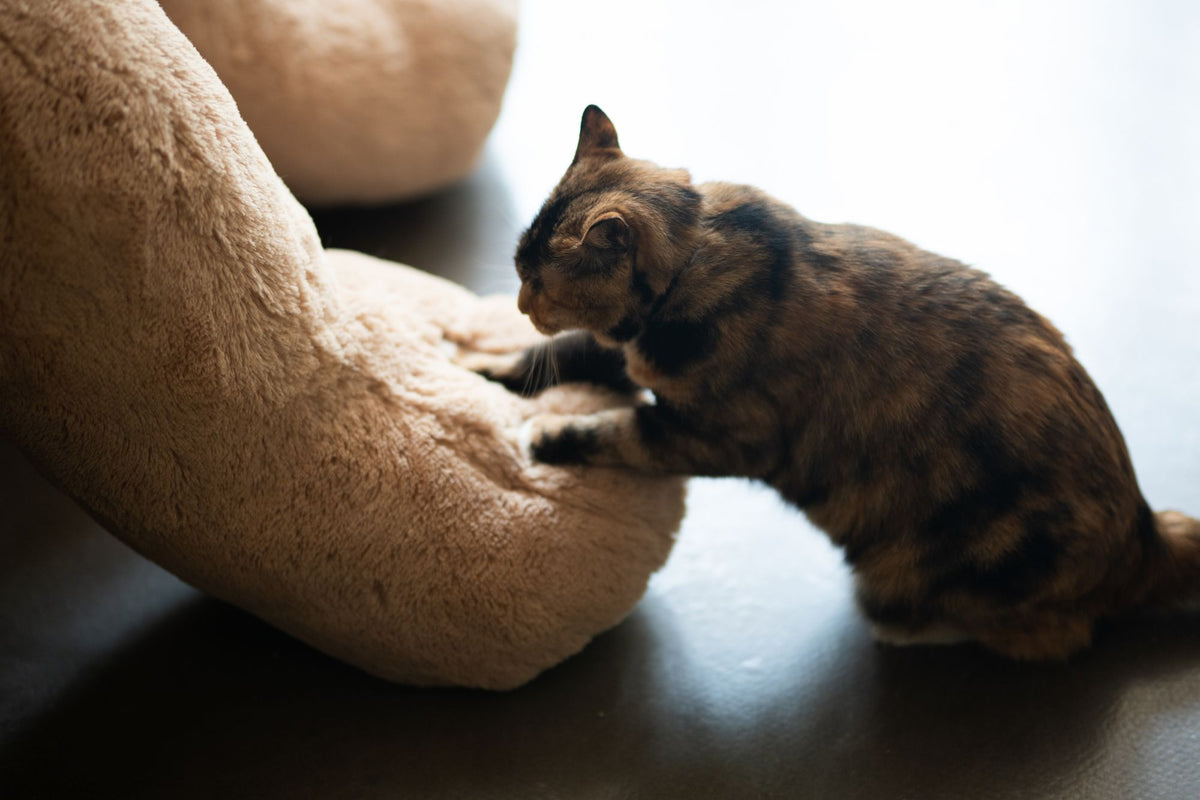
A cat that skips catnip can still find its corner in the ring
Catnip vs. Silvervine at a Glance
Response rates vary across studies and individual cats; treat these as general ranges, not guarantees for any one cat.
How to Introduce a New Scent Toy Safely
Trying silvervine (or catnip, if you haven't yet) is low-risk, but a few habits make the first few tries more useful:
- Introduce one novelty item at a time. If you change the toy, the treat, and the room all at once, you won't know what your cat actually reacted to.
- Offer it, then step back and watch. Let your cat approach on their own terms instead of holding the toy up to their face — that alone can suppress a genuine reaction.
- Don't force it. No reaction on the first try doesn't always mean "never" — but it also doesn't mean something's wrong. Some cats need a second exposure; others simply won't respond to that particular compound, and that's normal too.
- Watch for overstimulation, not just excitement. Occasional swatting, ankle-biting, or agitation after either catnip or silvervine is common in some cats — separate the cat from the toy for a bit if play starts looking more frustrated than fun.
- Keep it occasional. Both catnip and silvervine work best as an occasional novelty rather than a toy that's always saturated with scent — most cats develop a short-term "no thanks" refractory period after each session anyway.
This is general behavioral information, not a substitute for veterinary guidance. If your cat has a known respiratory sensitivity, or shows an unusual reaction (excessive drooling beyond a few minutes, vomiting, or disorientation), stop and check with your veterinarian.
Turning a Scent Reaction Into Real Play
A cat ignoring catnip isn't a failed toy — it's just one corner of the ring. Scent triggers like catnip and silvervine are great for getting a cat's attention, but the real payoff (for both of you) comes from turning that spark of interest into actual chasing, pouncing, and wrestling instead of a few minutes of passive sniffing.

Sagari Teaser Belt
CATSUMO's newest CATSUMO Wrestler accessory slides on in seconds and uses natural silvervine gall fruits plus chew-friendly leather fronds to spark hunt-and-stalk instincts — giving catnip non-responders (and curious catnip fans) a second scent trigger to try, attached to real chase-and-wrestle play instead of a stationary toy. See the Sagari Teaser Belt →

CATSUMO Catnip Refill Pack
If your cat is a confirmed catnip responder, the fastest way to keep that reaction working is fresh catnip — it loses potency once a toy's pocket has been squished and slept on for a few weeks. These sealed, full-strength sachets drop straight into the Wrestler's catnip pocket, so a toy that's gone quiet doesn't need replacing — just re-igniting. See the Catnip Refill Pack →
Either accessory clips onto the same platform: the CATSUMO Wrestler, a wearable glove-style toy that turns a scent reaction into a real, supervised wrestling match — pounces and bunny-kicks land on a designed "opponent" instead of your actual hands. Whichever corner your cat fights in, the goal is the same: real play, not just a good sniff.
FAQ: Catnip, Silvervine, and Non-Responders
Why does my cat ignore catnip?
Most likely genetics. Catnip sensitivity is an inherited trait, and studies estimate anywhere from about a fifth to a third of adult cats show little or no reaction to it, regardless of freshness or amount used.
Is it normal for a cat to have no reaction to catnip at all?
Yes. It's one of the most common and well-documented variations in cat behavior — non-response isn't rare, and it doesn't indicate a health problem on its own.
Why do some cats respond to catnip and others don't?
Sensitivity to catnip's active compound, nepetalactone, appears to follow a polygenic (multi-gene) inheritance pattern rather than a simple single-gene switch. Cats either carry enough of the relevant genetic makeup to react, or they don't — it isn't something trained or caused by the toy.
Can kittens have catnip, or do they need to be older to react?
Catnip is safe around kittens, but most don't show any behavioral reaction until roughly 6 months to 1 year old, often tied to reaching sexual maturity. A young kitten's lack of reaction isn't necessarily permanent.
What is silvervine and how is it different from catnip?
Silvervine (Actinidia polygama) is a kiwi-family plant, chemically distinct from catnip's mint-family nepetalactone. Its main compound, nepetalactol, plus additional compounds like actinidine, trigger a similar euphoric reaction in cats — but they act on scent pathways broadly enough that many catnip non-responders still react to silvervine.
Is silvervine safe for cats?
Yes. Silvervine is non-toxic and non-addictive, similar to catnip. As with any chew toy or accessory, supervise cats with silvervine gall fruit or chew sticks to prevent small pieces from becoming a choking hazard.
Can I give my cat both catnip and silvervine, or use them together?
Yes — many cat products combine or alternate the two, and using both isn't harmful. Since some cats respond more strongly to one than the other, offering both (at different times, not necessarily together) is a reasonable way to find out which "corner" your cat prefers.
Sources
- Bol, S., Caspers, J., Buckingham, L., Anderson-Shelton, G.D., Ridgway, C., Buffington, C.A.T., Schulz, S., & Bunnik, E.M. (2017). Responsiveness of cats (Felidae) to silver vine (Actinidia polygama), Tatarian honeysuckle (Lonicera tatarica), valerian (Valeriana officinalis) and catnip (Nepeta cataria). BMC Veterinary Research, 13, 385.
- PetMD — What Is Catnip and What Does It Do to Cats?
- PetMD — Silvervine Plant: An Alternative to Catnip
- cats.com — What Is Catnip? Why Cats Like It
- cats.com — Is Silver Vine Good for Cats?
- Wikipedia — Catnip (Nepeta cataria)
This article is for general educational purposes and is not a substitute for individualized veterinary or behavioral advice. If your cat shows an unusual or prolonged reaction to any scent toy, or if a lack of interest in toys is paired with other new symptoms, talk to your veterinarian.

Leave a comment
This site is protected by hCaptcha and the hCaptcha Privacy Policy and Terms of Service apply.